Showing posts with label marketing. Show all posts

Monday, May 11, 2015

When It Hurts So Bad

When it hurts so bad.
Being a female has many advantages. We get to adorn ourselves in many ways to look different. For example, we can wear certain clothes, shoes, jewelry and make up. We can polish our nails, gain or lose weight. And yes, we can even change our hair. Of the many things that we can do to adorn ourselves, two of those above mentioned have pain involved. Exercise and hair styling. Which one hurts the most? Well that is like choosing between the lesser of two evils. 

Hair styles are rad, cool, sexy, funky, conservative and they can be down right rebellious. A hair style can say a lot about a person before they even open their mouths. But the process of getting that hair style and the process of changing it as we see fit can be a tad bit daunting especially when you add texture to the hair styling process. 

What is it about textured hair that makes caring for it and styling it so dang on problematic and painful? Considering I take care of and style textured hair for a living, I have a clearer understanding of what the culprit is. In addition to working with textured hair,  I have a competitive advantage because I too have a head full of wavy Afro textured hair which adds to my knowing another level of understanding and credibility.  

The pain, headaches, oohs and ow's almost always comes from what I seriously think is the biggest culprit of them all. That one culprit is not knowing what kind of texture your hair is. I am always amazed by how  many people of color seriously believe that they all have kinky or and difficult hair. Why is that you ask again? Unfortunately, thanks to the people in marketing and those self appointed natural hair gurus for stereotyping an entire race of people. They have been very successful in doing this by duping masses of people into believing that race is somehow the determining factor to what kind of hair texture a person will have versus their genetics. There is something about the color of a person's skin that tricks even the most skilled into thinking that it is the skin color that determines what texture a person will have. That is not true. 


Natural hair and textured hair is not a Black thing.
It is a human thing.
For the life of me, I just do not understand how "natural" hair has become a "Black" thang. As if no other race of people have natural hair; not to mention textured hair. Why people? Why are so many people falling for this? In addition to stereotyping Black people, it is also the practices of hair care within certain races of  people that are passed down from generation to generation that I see as the problem to what makes caring for and styling hair difficult and painful. Often times these difficult and improper styling techniques are passed from culture to culture as well. When you put together generational practices and cultural practices; you end up with a brick wall of practices and techniques that are almost impossible to burst through. Again, why? It is simple; cultural practices trump. How? Because within those cultural practices are a level of respect and pride that people hold on to. Hence, self appointed hair gurus. People value the norms and practices of their family culture. Most of the people within that family structure have much respect for what has been, is being passed down or is introduced to them in hair care and hair styling. They want to pass it on. It becomes a "Black thing" simply because that person believes all Black people have the same issue. They will continue to pass on, share and practice improper hair care and hair styling techniques, even if it is wrong. 

They will do things like make YOUTUBE channels, create hair care products in their kitchen and sell it. They seriously believe most Black people have the same textured hair and are struggling with the same problems; even though they are not.  And most Black people will watch it because they want to believe it. The solutions are limited. The solutions are clumped together. Basically, they are sincerely looking for help.
As if women of color are the only people with "natural" hair. Really?


In my line of work, I use trichology (the study of scalp and hair) to help debunk that stereotype. I use trichology to tell people what they don't tell you at the hair salon. I also use trichology to help break the barrier to improper generational and cultural practices that lead to difficult and painful hair styling. As a matter of fact, hair styles are not even discussed until after we examine, determine and get a clear understanding of the individual's hair fabric (texture). I do not even consider race. It is the analyzing, the consulting and the customer's ability to recreate the care for and recreate the hairstyle that sets the tone for the salon experience. This process will eliminate what makes caring for and styling textured hair that hurts so bad. 

The cookie cutter approach to caring for and styling textured hair is causing millions of women to make poor choices about what to use on their hair and how to style it. The natural hair care movement is damaging textured hair in epidemic proportions. It is also the biggest rip off and the biggest contributor to this misnomer in hair. The branding and marketing of it all is preposterous. Again, the audacity to limit and depict "natural" to one race of people is racist. Folk need to leave their cultural practices at home, in the kitchen, in the chair and on the floor of their living room. They need to quit acting like they have been to Africa and is bringing back what all African people do to hair. Because all African people do not come from the same place in Africa doing the same thing to their hair. The mode of operandi via filtered images, social networking and outright overt cyber bullying to those who chemically alter their hair or use hair care products with synthetic ingredients reflects what an all time low certain people have stooped to make themselves feel and look important all because they don't like the hair that is on their head. And they do not know what to do with it. 


Stereotype, stereotype ad more stereotype. 
I have not made it a secret that I am not a fan of those images in magazines, books, social networks and any place else that depicts, advertise or promotes a school of thought that portrays that there are certain kinds of textured hair for guess who? Black people. Black women, to be exact. Then they had the nerve to come up with numbers and letters from A to D and 1 to 4 that they say the bulk of us are suppose to fit in. I ask who are "they?" And I say, "Really people?" What about Black men? As if they do not have challenges with their textured natural hair. What about the races of men who have textured hair? Do they not count too? This is not a black thang. Do you know how many Black people there are in America (not to mention the world) to deduce that many people of the same race to 4 numbers and 4 alphabets?  Damn can we at least get 26 images that represents hair textures? Although assigning each person a image along with a number to their own texture would be more like it. Don't suck your teeth, they give us all our own social security number, passwords and combination locks; surely they can do it for our hair! 

I mean, genetically and phenotypically (hmm, is that a word...lol) speaking, no two heads of hair are alike. It is impossible to categorize millions of black people with textured hair into 4 letters and 4 numbers. It is also ridiculous to exclude other races of people and sex who too have textured hair. I'm just saying... So stop with the shananigans already. Understand that regardless the letter or number there are too many people and another sex to conclude 4 common anything. I get that like clothing sizes, hair textures and types are nothing more than categories that are to simply designed to help us decide on what and what not to do or use on our hair. People, please understand that those categories are not absolutes. They are not even generalizations. Nothing in fashion is more interesting than to see a person who wears a size 14 successfully outfit herself into a size 10. It can be done, but I do not think that is best for the body type or the clothing itself. 

The clothing industry has done a magnificent job with categorizing a very large and extensive fashion industry to outfit everybody who wears clothes regardless of their cultural practice. They have done an excellent job at considering the varying races of people who wear clothes. They have also done a great job at developing a clothing size system to help people shop for what fits one's body size and type. The hair care industry has not. The hair care industry can not. Nor have they not put that much work into textured hair to do so.  I am just being honest. To sum this up, using something that is formulated for curly hair on kinky hair is not advisable. Just like wearing something that is a size 10 when you are a size 14. They are not nor will they ever be the same. Even if it reads, "For all hair types and same size fits all." 
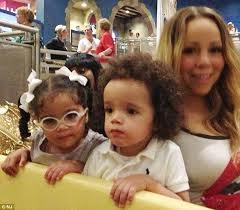
Mariah Carey and "Dem Babies." Funny, their  hair
types are not depicted in hair types A - D and 1 - 4...ijs


While getting your own seamstress to measure and design everything you wear is a tad bit much for the average bear, the concept of specialty stores makes a big as well as make clothes shopping a lot easier for the masses.

Because hair care and hair styling is a lot more affordable and more accessible than a seamstress; customizing is more achievable and doable for all who are interested. So, now back to this hair styling what can you do when it hurts so bad?

First things first. As you can see from reading what I just typed, I urge you to ditch the cookie cutter approach and ditch three things. Hair care products, hair styling tools and hair styling practices that oozes: natural hair, black hair care, women of color hair care, ethnic hair care on the bottle or and advertising. Instead look for the words that have the language of texture (curly, kinky, wavy, straight or and Afro) and the results you want to see on your hair in the hair care products. 


Black & Sassy: lively, bold and full of spirit.
cheeky. What does that have to do
with hair? This company should just use
the words at the bottom.
When it hurts so bad, the language on the bottle will help you better than the image you see in advertisement and in commercials. For example, ouchless, tangle free, combs easy, softens hair and so on. Next, it is imperative that you actually see the words "for curly, wavy, kinky, straight, straight, Afro, coarse, fine. limp, color treated, chemically treated or thinning and balding on it." If not, please put it back. For the record, like soap; when a chemist formulates a product, he or she is formulating for textures, types (weak, medium and strong in strength) and the results you want to see. The chemist is not formulating for race and cultural practices, norms and beliefs. Dove soap is used to clean skin regardless of race or ethnicity or gender. The makers of Crest would never brand, market, advertise and promote that their toothpaste is for White people only. They would never put it down and ethnic aisle. So do not make purchases according to what is being branded and marketed based off of race, lifestyle and attitude. For example, "Black and Sassy," "Baby Don't Be Bald," "Co-Washing." Buyer beware. 

Next, when it hurts so bad consider the cost. Be sure that what you are purchasing fits your budget. Then be sure to use the right comb for your hair texture and hair type. If you have dense, thick or very long tresses; you will need a comb with longer teeth that are closer together. Do not use a WIDE TOOTH comb; it will pull your hair out and compromise your curls, kinks, waves and Afro. Using the wrong comb is the second leading cause to why it hurts so bad. It is also the biggest culprit to compromised, damaged, torn and broken tresses over a relaxer and hair color on any given Sunday. I would bet my last dollar on that. So any one promoting wide tooth combs and de-tangling tangled, knotted and matted hair from the ends are wrong. 

The wide tooth comb is why it hurts so
bad.

Lastly, credibility. Refrain from buying what is new or trending. That means the hair product is still in the testing phase. That means that you and your hair are a part of the testing group. Buy from reputable companies and individuals who you knofw who have been around and have put in the research. They have a vested interest in your unique hair type and hair goal. These hair care companies also have grown with the changes in hair care and hair styling. Companies, who I call the quiet giants. Companies like P2 by Philiip Pelusi and Eufora, have been on the market for over 30 years. Decca Plus and Phyto have been in the market for over 40 years. Those four companies have been formulating products using the finest ingredients coupled with the latest technology for all textures of hair to make hair care and hair styling easy and pain free. They do not care about your race. Those are a few of my favorites. But their are many more.

In closing, I have to steal a thought processes my sister concluded the other day while we were on the phone about self esteem, When it hurts so bad, consider this .... "For all the time, money, energy, sweat and tears you put into building yourself up; do not allow someone to tear it all down." Especially when all they are looking for is money, popularity and a "Like" on social network. Now that would truly hurt so bad.

Monday, February 9, 2015

When Moist is the Choice

Finally, the blog of the year is here, "Moisture and hair." There are not a many of folk who have curly, wavy, kinky, Afro or a combination of textures who do not want to approach the "Hair Sage," the "Dali Lama of Hair,"  the "Guru of Hair," the "Hair Shaman," or the "Hair god" with the greatest question of them all for their textured tresses, "How do I keep my hair moist?" 

How wavy hair
looks when
the saline and hydrophobic bonds are
re-arranged on hair.
I call this the blog of the year, about hair that is, because upon every consultation with every person who has curly, wavy, kinky, Afro or a combination of textures; they all ask me about what can be done to make their hair feel moist. They want to know, why does their hair feel dry? They want to know, why do they feel those little tiny brittle knots on the ends of their hair? They want to know, how come it doesn't shine? They want to know, why does it poof? They want to know, why does it draw up? They want to know, how come when it is wet it looks pretty but when it is dry it looks dull frizzy and ugly? They want to know, why when they put products their textured tresses, it absorbs all of the product like a sponge? They want to know, "How can I keep my textured hair moist?"

So, I will answer all those questions in order as simple as I can in my R.Kelly voice. Microphone please, "Well, I'm not trying to rude, but hey pretty girl I'm feeling you.." That whole moist hair thing is something of an enigma for many with textured hair. Coming from one Afro wavy textured hair person to another with textured hair; it ain't happening. There. I got it out. 

Mr. Chris McClain,
CEO/President
of Advance Beauty Inc.
who also owns the
highly favored hair

care products for
textured tresses
CANTU
Now again, I am not trying to be rude and people, I am feeling you. But I have to tell you. This is all a marketing scheme developed by people who are simply responding to what the consumer is demanding in hair care. Like a drug dealer. If a cheap high is what folk are after, then they will come
up with a product to meet the demand of a cheap high. Those who are in the business of hustling drugs for cash will deliver to all who demand it. The exact can be said for the hair care industry. I know it is hard to fathom, but it is true. What do the hair companies really care about your hair? It is the money they are after. Since "moist natural hair" is the new thing and people are now anti chemicals, as a person of interest in making money; they go and invest in what the masses are asking for. The transitioning movement is televised. The transitioning movement is real and it it coming to you live and direct. The people with the money to invest are listening. They are responding. Now here is the TBH, most  owners of hair companies who make products for people with textured hair do not even have textured hair themselves. Not that it matters, but it sure would help. In addition, nor are they licensed dermatologists or cosmetologists or even chemists for that matter. Case and point, not take away anything from Mr. Chris McClain, CEO and president of Advanced Beauty Inc. out of Dallas, Texas who holds his degree in BAA, Marketing (Bachelors of Applied Arts and Sciences) in Marketing doesn't have a lick of curl. wave, kink or for in his hair (well maybe a little wave or curl), yet he is yo pusha man. He is that brotha in the alley, givin you what you need...
Yo pusha man!

Now do not go all Black power on me, it's strictly business never personal. Do not get mad at Mr. McClain. He is simply doing his job. 

And, before I answer each of those questions in order, I will turn to who I will identify as "My Partners in Hair Care," L'Oreal. No they are not legally my partners and no, they are not all organic and junk but they care. They are vested in hair; textured or not. They have been for umpteen years. I invite all to click on the link at the end of this blog, and go on the journey of hair via their website and you too will experience why I  personally and professionally call them, "My partners in hair care." I'm not saying Mr. McClain does not have the knowledge or experience of L'Oreal but-ter-umm, well just go Advanced Beauty Inc web sit then go to L'Oreals.

"So baby gimme that toot toot.." Here we go, what they don't tell you at the hair salon or the beauty supply store is that it is the structure of the hair's protein that allows it to take on many shapes from curly, kinky, wavy, straight, Afro, crimps, straight, locks, braids, curls,  Jheri curls, spiral curls, tight curls, lose curls, flips, spikes, waves, finger waves, pineapple waves and the likes. 

My partners in hair care, L'Oreal!
So what gives hair its ability to manipulate into those varying shapes? Their hydrogen bonds. One is saline (hardens) and the other is hydrophobic (pliable). Those two bonds are so weak, it doesn't take much to manipulate them. "Water and even dampness can change the state of the bonds" per L'Oreal. It is water  in its many forms that causes hair to appear in the form of poof, frizzy, curls that have fallen, reverting and converting hair. Water in its many forms will not only make hair look different; it will result in the hair feeling different as well.  Your hair will feel different because the water, steam, dampness, HEAT or MOISTURE will have disrupted those bonds, moved them around to change the state of your textured tresses into the NEW SHAPE as a result of it's contact with MOISTURE. 

There is no need to fret because remember those bonds can be shaped or rearranged deliberately, by accident or an act of God (rain, mist, sweat...) and the hair will take on a new shape per the source MOISTURE use to manipulate them. It is only in the case of chemically altering or exposing the strongest bonds (disulphide) to extreme abuse can you permanently alter the texture (curly, wavy, kinky, Afro or straight) into a new pattern or texture.  "Let me get a beep, beep!"
How wavy hair looks when you
use heat from flat irons to
re-arrange saline and
hydrophobic bonds.
Who gone
check me boo!

So now you can see why the ability have moist wet feeling hair all the time is probably not the state you want your textured tresses to be in. Also, you can see how heat is not bad for hair because those two hydrogen bonds are only temporarily responding and taking on its new shape per the source of moisture (water, dampness, steam, mist or heat) applied to it. And that only in the case of chemicals and extreme exposure to any forms of that moisture can we permanently alter the natural texture (curly, wavy, kinky, Afro, straight or combination) of our hair. 

Now, I will answer those questions in order.
1. How to make hair moist?

You wet it. But understand, that extreme exposure to moisture (water, dampness, steam, mist or heat) in any form will permanently alter the texture of your hair. That does not mean you can not put heat on your textured tresses. It means too much can permanently damage hair.

2. Why does my hair feel dry?

Because it is. Trying to make textured tresses feel moist is like always trying to make a leaf feel wet or concrete smooth. Texture hair is suppose feel textured and gritty just like leaf and concrete. To change it's state would be to expose it to extreme change in temperatures i.e the change of seasons or asphalt.

3. Why do I feel those little brittle knots in my hair especially on the ends?

A microscopic view of knotted or beaded hair. Also
known as Trichorrhexis Nodosa. Not Ladosha!
Again, if you are using products that are water based, it is the water in those products that are doing what? Arranging the hydrogen bonds. Affecting that outer most layer called keratin or cuticle causing them to knot up. That now becomes a hair disorder called, TRICHORRHEXIS NODOSA ( a problem when thickened or weak points/nodes along the hair shaft causes your hair to break easily). See, now you gotta go and pay your hairstylist or go back to the supply store and spend more money. Now do you believe me? There is a profit design in ALL of this. Either the person who is doing your hair, making the products for your textured hair or is selling the products for your textured hair do not know their hair science or they are simply selling you the hair science of hair that YOU DO NOT KNOW. Either way, you are being played like a piano. I don't do that. 

While water is natural, it also can be very damaging to hair; when? When you use it in extreme forms, again; it not only rearranges those two hydrogen bonds but now they are affecting the disulphide bonds which are the strongest of the three. To reiterate, when those disulphide bonds are arranged, permanent change in the structure of the hair is almost always the result. So if it is moist hair that you are truly after; drink it. Don't apply it. 
How textured hair looks when too
much moisture is applied to the
saline and hydrophobic bonds. 

Refrain from using products that are water base, where water is the first ingredient. Perhaps Aloe, glycerin, cetaryl alcohol which is a fatty oil derived from coconut people; not denatured. Also, oil based products are a great alternative. As the oil will act as a barrier, preventing the hair from taking on a new shape as it dries. Another great thing to do do it to go buy some litmus paper from the pharmacy to check the pH on those products. Yes, the organic and natural products too. If the pH is 7, so is what? Water. That means that product will be too drying for your textured tresses. Your hair will feel naturally taught, brittle and dry. I am not saying those products are bad. I am saying for textured tresses; they may be a tad bit too drying. A pH of about 5-6 would be ideal for a styling agent for textured hair! 

4. How come my textured hair doesn't shine?

Read number 2. In addition, because the hair is coiled, it simply does not reflect the light as well as if the hair was smooth and straight. Nothing more and nothing less. So do not go adding more product. Coloring your hair darker may help with the appearance thus making it look more shiny.

5. Why does my hair poof?

Re-read number 1.

6. Why does my hair draw up?

Again, re-read number 1. Understand that hair is skin. Hair like skin, climatizes. That means the skin and hair will adjust and take form to the climate/temperature it is exposed to. For example. if you go outside in the cold; what will your skin do? Constrict and draw up. You can feel your hands tighten. So will your hair, when it is wet and it becomes exposed to the drying air. If you go into moist steamy atmosphere, what will your skin do? Become moist, clammy and sweaty. So will your hair. It is your skin's natural response to the climate. If you don't want your skin to become clammy, sweaty and moist; you would use a ANTIPERSPIRANT.  And if you do not want your hair to frizz, you should use an ANTI HUMECTANT or DEFRISANT. Or oil! Yep oil and water do not mix.

7. How come when my hair is wet, it looks pretty but when it is dry it looks dull frizzy and ugly?

Re-read number 6.

8. How come when I put products on my textured tresses, it absorbs all of the product like a sponge?

Who ever said hair is dead, is why we ask these types of questions. Hair is dead in the sense that is has no nerve endings. When we cut it, we can not feel it; nor does it bleed. Yet,  hair has the innate ability to open and close via the cuticle (keratin) layers. Anything that open and closes; expands and swells and absorbs is very much alive.That is how we change its shape temporarily as this blog is highlighting or chemically alter it's shape, color and texture. If hair was dead, trust and believe none of this would occur. I have serviced enough people who have transitioned to know what I am talking about. Ask any mortician if you can chemically alter hair and they will tell you...no. Hair is very much alive, that is why it is absorbing what you put on it. The more you put on it, the more you are doing what? Arranging those bonds. The constant application of hair products is constantly rearranging those bonds and the hair is simply doing what is designed to to when it is constantly exposed to water; absorb it. Nothing more. nothing less.

9. Again they want to know, how can I keep my textured hair moist?

Wet it or drink water.


Drink plenty of water.


Please go on this hair journey with my partners in hair care and I at:
www.hair-science.com 

"Running yo hands through my fro..."


Sunday, January 11, 2015

The Problem With Hair Care

Albert Einstein's formula for relativity was a result of his constant pondering of what makes things move. In my constant wondering why do so many women turn their hair care and hair style over to the hair stylist or salon, I too developed a formula. I took those thoughts and answers and used them to develop a formula to help. It is my belief that licensed hair stylists should do more than just shampoo and style hair. Therefore, I will join the elite number of licensed hair stylists who care and use my formula to help women nation and world wide learn how to care for and do their own hair. It is my mission to teach the masses how to care for and style their hair themselves continues.


"When one is in chains we are all bound."
There are three simple steps to my mission. The first step is to expose the methods that contribute to the madness hair stylist and salon slavery. The second step is to reveal the formula and the third step is to spread the word.

The method to the madness in hair styling starts with the trouble of no hair care. Make no mistake, it is the overt removal of and disdain for hair care that is often times promoted UNKNOWINGLY by licensed cosmetologists or is passed from generation to generation through family members and/ who both more than likely misinformed. For licensed cosmetologists, the scenario of not being properly educated, trained and tested in hair care further perpetuates this madness. Because hair styling is the primary focus and income earner for most licensed cosmetologists and salon owners, hair care and how to use the salon visit to teach rarely gets addressed. 


The power of marketing!
There is an unspoken contract between customers, licensed cosmetologists and hair care product manufacturers that is dropped off on an impromptu's notice in the salon and in certain CEU (continuing education units) classes by unscrupulous, untrained and unlicensed sales reps that add momentum to the madness that is surely spiraling out of control. The unspoken contract often starts with the solicitation to sell hair care products and education to the stylists as she styles the hair while the customer sits in the chair. The unspoken contract is also where segregation, race, hair textures and hair types are clumped together for the soul purpose of duping salon customers (old, new and potential) and consumers of hair styling products alike that what and who they see as well as hear in the advertisements are true. This statement is easily proven as fact when during this day and time there remains an "ethnic" hair care aisle in the varying stores that sell hair styling products. There remains "ethnic" in the marketing and commercialism in hair styling products. In addition, very few licensed cosmetologists, cosmetology students, cosmetology educators and hair care product manufacturers are bold enough to hold accountable the blatant removal and exclusion of textured hair mannequins in the schooling, education, training and stated tested licensing process. Sheer madness I say; sheer madness.

The unspoken contractual method all hurt and enable the consumer and the licensed cosmetologists. Yet the manufacturers of the multi-billion dollar hair styling/beauty industry become richer by the bulks, threads, needles, bottles, jars, tubes, cords and more. So, it is the method to the madness that hurts hair care.


Einstein's Theory
Now, on to the second step of my mission, sharing my formula. The formula to caring for your hair is simple and easy to use. Einstein's formula of relativity is E = mc2. Ladosha's formula to hair care is mhc2 = E. In Einstein’s relativity formula E=mc2, energy is pertinent; energy is the equivalent of what makes the mass and the speed of light (c) times acutally MOVE!  

In the formula for hair care (mhc2 = E) it is the ability to manage your hair care (at least 2 times per day) that actually takes energy (and time)! In addition, proper knowledge and instructions on which products to use for your specific hair texture and hair type is key to my manage hair care (mhc2 =E) formula.

I have always been concerned with women turning their hair care and hair style over to a hair stylist who don't even wake up with them in the morning, or after a work out and the likes to help when hair styling matters most. So waiting to return to the salon is not always the best option for many. Please keep in mind that the "waiting to return to the salon for two weeks" is another method to the madness. Dirty hair is where the money is. They even create hair styles as well as formulate hair care products and marketing campaigns specifically for consumers who do not shampoo their hair frequently. Hence, "ethnic."
Ladosha's formula on hair care.

Now this is where "the problem with hair care gets sticky." My experience has been, that for the most part it appears to be that there is a high number of women with textured (curly, kinky, wavy and Afro) who have a belief system as well as an earnest sentiment where they correlate the price and time spent in a salon on hair style with hair care. That truly concerns. It motivated my developing this formula. Removing, ignoring, not addressing and not making the time to teach the customer what to do with their hair in between salon visits is directly related to unwanted hair damage and hair loss. It promotes their false belief and sentiment. While it is difficult for a large number of women to fathom that they are being deliberately or unknowingly removed from the equation of hair care; it is true. To address this task (TIME/ENERGY) due to their daily activities (careers, family, children, church and other commitments) many women spend very little time. In addition, very little or none of their energy is spent on hair care. Therefore, I must reiterate the importance of YOU making the time and energy to learn your hair yourself. It is vital to longevity of having it on YOUR head. 

Make it your business to turn every salon visit as a "teachable moment" versus immersing yourself into your electronic device, gossiping, complaining, eating and the likes. Instead, utilize every visit to to include YOU into the formula of learning how to care for and do your own hair. Do not fret if you are a novice to doing your own hair. Any professional licensed cosmetologist would be glad to help you. If not, come see us at The Reverence Design Team Hair Salon in Cleveland Heights, Ohio!

Licensed hair stylist should be teaching every customer
how to care for and style their hair in between
salon visits.
2015 represents a new year. For many the new year brings about a new attitude. Check yours and your hair stylist's attitude toward hair care. See if you two are working on the same equation when it comes to your hair. And in that equation, E=mhc2 we know that you are the vital part of that (E)energy. Managing Hair Care (MHC) 2 times per day is what it will honestly take to keep your hair on your head. It will also give you the ability to style and re-style your hair.

In closing, do not allow anyone or anything to remove you from that equation.