
 |
| How wavy hair looks when the saline and hydrophobic bonds are re-arranged on hair. |
So, I will answer all those questions in order as simple as I can in my R.Kelly voice. Microphone please, "Well, I'm not trying to rude, but hey pretty girl I'm feeling you.." That whole moist hair thing is something of an enigma for many with textured hair. Coming from one Afro wavy textured hair person to another with textured hair; it ain't happening. There. I got it out.
 |
| Mr. Chris McClain, CEO/President of Advance Beauty Inc. who also owns the highly favored hair care products for textured tresses CANTU |
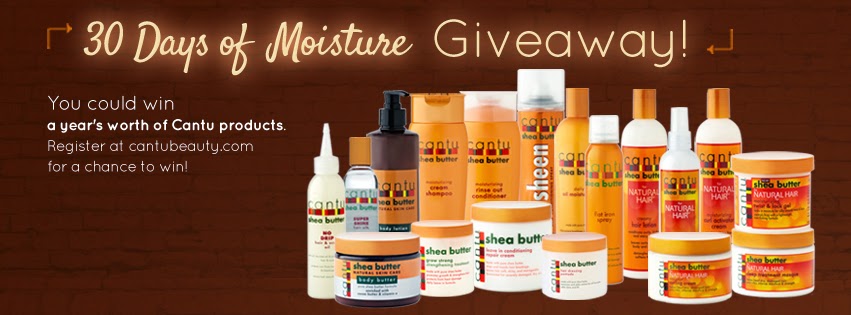
up with a product to meet the demand of a cheap high. Those who are in the business of hustling drugs for cash will deliver to all who demand it. The exact can be said for the hair care industry. I know it is hard to fathom, but it is true. What do the hair companies really care about your hair? It is the money they are after. Since "moist natural hair" is the new thing and people are now anti chemicals, as a person of interest in making money; they go and invest in what the masses are asking for. The transitioning movement is televised. The transitioning movement is real and it it coming to you live and direct. The people with the money to invest are listening. They are responding. Now here is the TBH, most owners of hair companies who make products for people with textured hair do not even have textured hair themselves. Not that it matters, but it sure would help. In addition, nor are they licensed dermatologists or cosmetologists or even chemists for that matter. Case and point, not take away anything from Mr. Chris McClain, CEO and president of Advanced Beauty Inc. out of Dallas, Texas who holds his degree in BAA, Marketing (Bachelors of Applied Arts and Sciences) in Marketing doesn't have a lick of curl. wave, kink or for in his hair (well maybe a little wave or curl), yet he is yo pusha man. He is that brotha in the alley, givin you what you need...
 |
| Yo pusha man! |
Now do not go all Black power on me, it's strictly business never personal. Do not get mad at Mr. McClain. He is simply doing his job.
And, before I answer each of those questions in order, I will turn to who I will identify as "My Partners in Hair Care," L'Oreal. No they are not legally my partners and no, they are not all organic and junk but they care. They are vested in hair; textured or not. They have been for umpteen years. I invite all to click on the link at the end of this blog, and go on the journey of hair via their website and you too will experience why I personally and professionally call them, "My partners in hair care." I'm not saying Mr. McClain does not have the knowledge or experience of L'Oreal but-ter-umm, well just go Advanced Beauty Inc web sit then go to L'Oreals.
And, before I answer each of those questions in order, I will turn to who I will identify as "My Partners in Hair Care," L'Oreal. No they are not legally my partners and no, they are not all organic and junk but they care. They are vested in hair; textured or not. They have been for umpteen years. I invite all to click on the link at the end of this blog, and go on the journey of hair via their website and you too will experience why I personally and professionally call them, "My partners in hair care." I'm not saying Mr. McClain does not have the knowledge or experience of L'Oreal but-ter-umm, well just go Advanced Beauty Inc web sit then go to L'Oreals.
"So baby gimme that toot toot.." Here we go, what they don't tell you at the hair salon or the beauty supply store is that it is the structure of the hair's protein that allows it to take on many shapes from curly, kinky, wavy, straight, Afro, crimps, straight, locks, braids, curls, Jheri curls, spiral curls, tight curls, lose curls, flips, spikes, waves, finger waves, pineapple waves and the likes.
 |
| My partners in hair care, L'Oreal! |
There is no need to fret because remember those bonds can be shaped or rearranged deliberately, by accident or an act of God (rain, mist, sweat...) and the hair will take on a new shape per the source MOISTURE use to manipulate them. It is only in the case of chemically altering or exposing the strongest bonds (disulphide) to extreme abuse can you permanently alter the texture (curly, wavy, kinky, Afro or straight) into a new pattern or texture. "Let me get a beep, beep!"
 |
| How wavy hair looks when you use heat from flat irons to re-arrange saline and hydrophobic bonds. Who gone check me boo! |
So now you can see why the ability have moist wet feeling hair all the time is probably not the state you want your textured tresses to be in. Also, you can see how heat is not bad for hair because those two hydrogen bonds are only temporarily responding and taking on its new shape per the source of moisture (water, dampness, steam, mist or heat) applied to it. And that only in the case of chemicals and extreme exposure to any forms of that moisture can we permanently alter the natural texture (curly, wavy, kinky, Afro, straight or combination) of our hair.
Now, I will answer those questions in order.
1. How to make hair moist?
You wet it. But understand, that extreme exposure to moisture (water, dampness, steam, mist or heat) in any form will permanently alter the texture of your hair. That does not mean you can not put heat on your textured tresses. It means too much can permanently damage hair.
2. Why does my hair feel dry?
Because it is. Trying to make textured tresses feel moist is like always trying to make a leaf feel wet or concrete smooth. Texture hair is suppose feel textured and gritty just like leaf and concrete. To change it's state would be to expose it to extreme change in temperatures i.e the change of seasons or asphalt.
3. Why do I feel those little brittle knots in my hair especially on the ends?
 |
| A microscopic view of knotted or beaded hair. Also known as Trichorrhexis Nodosa. Not Ladosha! |
While water is natural, it also can be very damaging to hair; when? When you use it in extreme forms, again; it not only rearranges those two hydrogen bonds but now they are affecting the disulphide bonds which are the strongest of the three. To reiterate, when those disulphide bonds are arranged, permanent change in the structure of the hair is almost always the result. So if it is moist hair that you are truly after; drink it. Don't apply it.
 |
| How textured hair looks when too much moisture is applied to the saline and hydrophobic bonds. |
Refrain from using products that are water base, where water is the first ingredient. Perhaps Aloe, glycerin, cetaryl alcohol which is a fatty oil derived from coconut people; not denatured. Also, oil based products are a great alternative. As the oil will act as a barrier, preventing the hair from taking on a new shape as it dries. Another great thing to do do it to go buy some litmus paper from the pharmacy to check the pH on those products. Yes, the organic and natural products too. If the pH is 7, so is what? Water. That means that product will be too drying for your textured tresses. Your hair will feel naturally taught, brittle and dry. I am not saying those products are bad. I am saying for textured tresses; they may be a tad bit too drying. A pH of about 5-6 would be ideal for a styling agent for textured hair!
4. How come my textured hair doesn't shine?
Read number 2. In addition, because the hair is coiled, it simply does not reflect the light as well as if the hair was smooth and straight. Nothing more and nothing less. So do not go adding more product. Coloring your hair darker may help with the appearance thus making it look more shiny.
5. Why does my hair poof?
Re-read number 1.
6. Why does my hair draw up?
Again, re-read number 1. Understand that hair is skin. Hair like skin, climatizes. That means the skin and hair will adjust and take form to the climate/temperature it is exposed to. For example. if you go outside in the cold; what will your skin do? Constrict and draw up. You can feel your hands tighten. So will your hair, when it is wet and it becomes exposed to the drying air. If you go into moist steamy atmosphere, what will your skin do? Become moist, clammy and sweaty. So will your hair. It is your skin's natural response to the climate. If you don't want your skin to become clammy, sweaty and moist; you would use a ANTIPERSPIRANT. And if you do not want your hair to frizz, you should use an ANTI HUMECTANT or DEFRISANT. Or oil! Yep oil and water do not mix.
7. How come when my hair is wet, it looks pretty but when it is dry it looks dull frizzy and ugly?
Re-read number 6.
8. How come when I put products on my textured tresses, it absorbs all of the product like a sponge?
Who ever said hair is dead, is why we ask these types of questions. Hair is dead in the sense that is has no nerve endings. When we cut it, we can not feel it; nor does it bleed. Yet, hair has the innate ability to open and close via the cuticle (keratin) layers. Anything that open and closes; expands and swells and absorbs is very much alive.That is how we change its shape temporarily as this blog is highlighting or chemically alter it's shape, color and texture. If hair was dead, trust and believe none of this would occur. I have serviced enough people who have transitioned to know what I am talking about. Ask any mortician if you can chemically alter hair and they will tell you...no. Hair is very much alive, that is why it is absorbing what you put on it. The more you put on it, the more you are doing what? Arranging those bonds. The constant application of hair products is constantly rearranging those bonds and the hair is simply doing what is designed to to when it is constantly exposed to water; absorb it. Nothing more. nothing less.
9. Again they want to know, how can I keep my textured hair moist?
Wet it or drink water.
Please go on this hair journey with my partners in hair care and I at:
www.hair-science.com
"Running yo hands through my fro..."
Read number 2. In addition, because the hair is coiled, it simply does not reflect the light as well as if the hair was smooth and straight. Nothing more and nothing less. So do not go adding more product. Coloring your hair darker may help with the appearance thus making it look more shiny.
5. Why does my hair poof?
Re-read number 1.
6. Why does my hair draw up?
Again, re-read number 1. Understand that hair is skin. Hair like skin, climatizes. That means the skin and hair will adjust and take form to the climate/temperature it is exposed to. For example. if you go outside in the cold; what will your skin do? Constrict and draw up. You can feel your hands tighten. So will your hair, when it is wet and it becomes exposed to the drying air. If you go into moist steamy atmosphere, what will your skin do? Become moist, clammy and sweaty. So will your hair. It is your skin's natural response to the climate. If you don't want your skin to become clammy, sweaty and moist; you would use a ANTIPERSPIRANT. And if you do not want your hair to frizz, you should use an ANTI HUMECTANT or DEFRISANT. Or oil! Yep oil and water do not mix.
7. How come when my hair is wet, it looks pretty but when it is dry it looks dull frizzy and ugly?
Re-read number 6.
8. How come when I put products on my textured tresses, it absorbs all of the product like a sponge?
Who ever said hair is dead, is why we ask these types of questions. Hair is dead in the sense that is has no nerve endings. When we cut it, we can not feel it; nor does it bleed. Yet, hair has the innate ability to open and close via the cuticle (keratin) layers. Anything that open and closes; expands and swells and absorbs is very much alive.That is how we change its shape temporarily as this blog is highlighting or chemically alter it's shape, color and texture. If hair was dead, trust and believe none of this would occur. I have serviced enough people who have transitioned to know what I am talking about. Ask any mortician if you can chemically alter hair and they will tell you...no. Hair is very much alive, that is why it is absorbing what you put on it. The more you put on it, the more you are doing what? Arranging those bonds. The constant application of hair products is constantly rearranging those bonds and the hair is simply doing what is designed to to when it is constantly exposed to water; absorb it. Nothing more. nothing less.
9. Again they want to know, how can I keep my textured hair moist?
Wet it or drink water.
 |
| Drink plenty of water. |
Please go on this hair journey with my partners in hair care and I at:
www.hair-science.com
"Running yo hands through my fro..."


