Monday, September 5, 2016

Herbal Shampoos

Here we go again. Shampoos. Shampoo is one of those words in the hair care industry that I wish they would change. 

Have you ever heard the expression, "Hair is to be shampooed not washed?" In my opinion, people who use that statement or support that school of thought have no clue of how discern shampooing from washing. For the amount of heavy products, infrequent practice of shampooing and what the scalp naturally emits, washing is truly a better verb to use to teach people how to clean their scalp and hair. But, since shampoo is the proper term, let us investigate it!

Sometime during 5000 BC, the Egyptians were using all sorts of herbs, oils and tinctures to apply to hair and scalp for cleansing and beautification. That wasn't working to well due to some little tiny life forces called micro organisms. Mircro organisms resulted in scalp issues, hair bugs of lice and mice that promoted the invention and wearing of wigs. Soon, the invasion of Egypt changed things.During the same time, the Babylonians had their own methods of beautification. The Chinese method of champing was common. Champing is a massage technique using fingers, thumbs and knuckles to massage the entire body. 

During that time an Indian military soldier named Dean Mohamet observed this technique of champing during his military travels working for the elite. After the war, Dean Mohamet became unemployed. He decided to use the art of Champing, now termed Champu to provide body cleansing and massage services for Hindi sultans and nabobs. Tired of the champu technique being exclusively provided to the wealthy, he ventured away from servicing the wealthy and added soap to his champing technique to service everyday people. After being practiced in England for such long time, in 1860 champu spelling was changed to shampoo. Then it was officially recorded and entered into the dictionary as "the soap used for cleansing hair."


Later in 1908 Hans Schwarkzkopf (yes, the maker of the professional hair color) developed a powder to clean hair because he disliked soap and the film it left behind on hair. To promote his new found invention, he took an article out in the New York Times titled, "How to Shampoo Your Hair." It was an instant success. 

Not be outdone by a German, an American doctor, Dr. John Breck (yep, of the Breck girls commercials) invented the first pH shampoo, thus making the experience of shampooing hair more gentle to the touch and less tangles in the hair. 

So, now we are in the new millennium and shampoo is just now making a turn around the corner to be in the spot of hair care where it should be....from the hands, to the hair and back to the hands again!
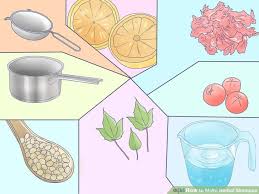

The shampoos of today gets its the force to make the curve from its ingredients. The force of the ingredients are herbs. What are herbs? Botanists describe an herb as a small, seed bearing plant with fleshy, rather than woody, parts (from which we get the term "herbaceous").   In addition to herbaceous perennials, herbs include trees, shrubs, annuals, vines, and more primitive plants, such as ferns, mosses, algae, lichens, and fungi. So now we see herbs are the good stuff. 

What makes herbs good? Nutrient bioavailability is what makes the herb worth its weight on a shelf in your salon or shower caddy in your bathroom. So what exactly is bioavailability?Bioavailability in hair care is very similar to the process of it when consuming food. The difference is when the product comes into contact with the scalp and where the those vital nutrients from the herbs and essential oils go. For example, when you apply the shampoo to your hands the ingredients are absorbed into your skin. Next you apply it to the customers scalp and the nutrients contained in the shampoo are released from the matrix of the herbs or and essential oil, absorbed into the bloodstream and transported to their respective target tissues. In this case the target tissue would be the, papilla. Bam!
Come on now Aveda, Aryuvedic is a BELIEF in the balance
of mind, body and spirit. Not long volumizing hair. 


However, not all nutrients can be utilized to the same extent. In other words, they differ in their bioavailability. So, the first step in making a nutrient bioavailable is to liberate it from the herb (which is a food too) matrix and turn it into a chemical form that can bind to and enter the follicles (that are on your scalp where the hairs on your head grows from) cells or pass between them and work their magic. 

The question is; does your shampoo do that? Probably not. 

Do not be duped by products claiming to be organic, natural, for natural hair, for women of color, for Black women and for ethnic hair. Those terms mean nothing in the world of bioavailabiity. Bioavailability is how your hair, scalp and other organs receive or not receive what is intended to improve or maintain the health of your hair. 
Not even owned by an African,
let alone has herbs in it. 


Herbal shampoos that tout SLS-Free, Sulfate Free, Petroleum Free, Mineral Oil Free, Vegan, Gluten Free, No Animal Testing, Paraben Free are simply buzz and trending works marketing companies use to promote their client's shampoo.

Instead, look for buzz words in the ingredients or pamphlets that include words like nutraceuticals, enyzmatic activity, bioavailability, absorption, USP (United States Pharmacopeia),follicle care to name a few to spike your interest to grab the bottle, click the mouse or press your finger. 

Herbal shampoos that actually include herbs, essential oils, fruits, vegetables, vitamins and proteins will suffice when coupled with some of the buzz word used above. 

While the word "organic" gets people all warm and fuzzy inside; buyer beware. The results are more often anti-climactic for the masses. Understand that the term "organic" is a term for agriculture not hair care. Organic is all how about how. To know the efficacy of what is organic in you shampoo, look for seals from such caring agencies who test the efficacy of what is supposed to be organic. Agencies such as Ecocert and ICEA (International per la Certificazione Etic de Ambientale) have websites that provide links to hair care companies who they have certified. 
Make your next purchase via ICEA.


The Reverence Design Team Hair Salon located in Cleveland Heights, Ohio prides itself as one of the many salons worldwide who uses USDA Organic, Ecocert and ICEA certified shampoos, conditioners, proteins on their clients' hair as well as a salon who retails soaps, lotions, body butters, deodorants and toothpaste. 

How's that for herbal shampoos.  

Monday, August 22, 2016

The Great Escape

Once upon a time...
Once upon a time there lived women who loved to adorn themselves. Taking time to look at oneself from head to toe with their own eyes was the way to start the day after prayer. As time went on and new things came into civilization, the mirror was introduced. After women completed their morning rituals (prayer, getting children ready, caring for their parents and the likes), they would adorn themselves in the mirror. Adorning had a different meaning for different people. For some adorning meant cleaning their body, for others adorning meant cleaning, rubbing on oils and applying perfumes and for another group adorning added hair styling to that adorning process. 

Today, adorning has taken a different path. Due to the paradigm shift in womanhood, motherhood, career, marriage and so; adorning is not quite the foo-foo frilly girly girl stuff it used to be. While spending two hours to get ready for the day is not on the minds or in the schedules of today's woman; there should be some time set aside to simply adorn, care for and prepare yourself as you go out into the world to do whatever pleases you. 

Family, career, spirituality, philanthropy and care for others are extremely important to many for varying reasons. However, nothing is more important than self. Self can sound so selfish. Well, because it is. Incorporating self first is priority one as you prepare for tomorrow today, right now. The story of the flight attendant instructing passengers to place the oxygen mask over their nose first in the event of an emergency remains a favorite analogy to many in encouraging others the importance of putting self first. 

The same can be said when making an effort to face the goals, task or challenges of the day. Putting your best foot forward every time you can is essential to doing your purpose or finding it. Putting your best foot forward begins or concludes with raising your arms to care for your hair as you enter the world of co-existing.

The misnomer that beauty takes a lot of time discourages many who are involved or is overwhelmed with the hustle and bustle demands of preparing for the day. This blog is to inform you that it does not take a lot of time. Taking the time to adorn yourself has many benefits. Some examples of those benefits are as follows:
Time will give you time.
  1. Combing hair, 2-5 minutes
  2. Washing your hair, 5-10 minutes
  3. Learning how to care for your hair is a great stress buster, 5 min. to 2 hours
  4. Curling your hair, 5-45 minutes
  5. Blow drying your hair, 5-30 minutes
  6. Braiding your hair, 5 min. - 2 hours
Some benefits to doing your own hair:
  1. It can save you time from to and from travel time to the salon
  2. It can save you time on the wait time at the salon
  3. It shows your children who are watching your rituals that self-care is important
  4. It affords you a chance to examine your entire body and notice if something is not right (i.e. lumps, bumps, moles, skin irritation, body odor and so on)
  5. It shows your mate the importance of self-care
While taking the time to adorn yourself may seem like a waste of time, it is not. Refrain from ignoring all that you consider beautiful about yourself. Do not allow the frustration and confusion of not knowing how to do your hair, keep you from it. Take the time and make the time to learn your hair. Invest wisely. Understand that you only purchase 3 items to care for your entire body. Soap, lotion or oil and deodorant. Both are done with the use of a face cloth, loofah mitt and hands. Hair care should only consist of 3 items as well. Shampoo, conditioner (optional) and a styling agent (oil, cream, spray, gel, leave in conditioner and the likes). Hair can be styled with up to 3 things: comb, brush (optional) and your hands!

The impact is real today.
The great escape for many began at the onset of slavery. Not just for the slaves but for the masters, their spouses and offsprings as well. The "man's" main focus was control over all for the sake of land, money, and lust. The "man" or the master was not interested in hygiene or care of self. He knew that they key to mental and physical slavery was to deny self-care. Self-care connects one to their spirit. His goal was to break that spirit for control and money. That type of mental abuse and neglect carried over and was incorporated as a way of life for many. 

Sometime during the 1920's through 1970, people were no longer running. People were learning and embracing their culture and its practices. From the coiffed hairstyles of the 20's through the 50's to the Afros, cornrow braids and long hair of the 60's; people were loving and embracing the hair that made them unique. 

When was the last time you did this!
The momentum of the run has returned with the introduction of fancy marketing as companies and people brand themselves. Their goal is to promote their products and themselves by selling a possible solution to your fear of your hair and desires to look a certain way. The tactics seen on social media, print and TV are directly responsible for you not wanting to do your hair yourself. Self-esteem, lack of self-knowledge and history of your lineage also play a vital role in how you see yourself. 

In the end, It is important to beautify and adorn yourself. Both are vital to your existence as a human because again, they enhance and connect to your spirituality. Love yourself as you be yourself. Be open to growing and learning about yourself and your hair on a daily basis. 

Remember, "Beauty is, as beauty does, as beauty gets!"